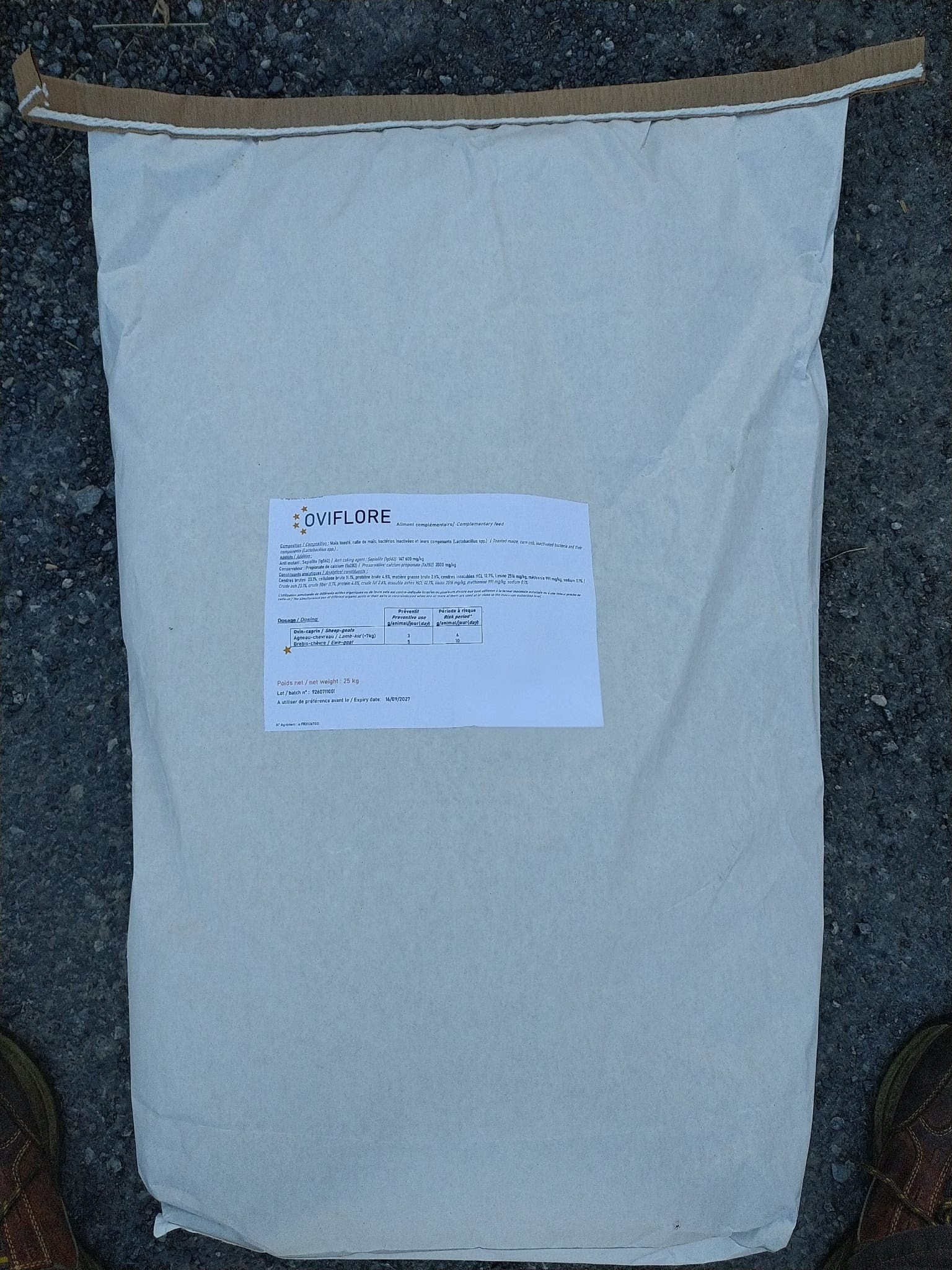
Ovi Flore
Support for digestive flora and rumen balance.
Format: 20 kg bag
Nutritional supplement for ewes and lambs to support feed transitions, digestive stress periods, and return to regular gut function.
Quick summary
- Supports digestive flora and rumen balance during sensitive periods.
- Useful in feed transitions, digestive stress, and post-antibiotic phases.
- Combines postbiotic approach, inactive yeasts, and trace elements.
- Short-course strategy adaptable to farm context.
Frequently asked questions
When should Ovi Flore be started?
At feed transitions, group changes, or after antibiotic treatment.
How long should the course last?
Lambs: 10 to 21 days. Ewes: 7 to 14 days depending on context.
Why include inactive yeasts?
They support rumen function and help stabilize digestive fermentations.
Is veterinary follow-up needed?
Yes, in persistent or complex clinical situations.
Main objectives
- Stabilize digestive microbiota.
- Support rumen fermentations.
- Help maintain overall condition during sensitive periods.
Key components
- Lactobacillus rhamnosus/farciminis + Enterococcus faecium: beneficial flora support.
- Inactive yeasts (Saccharomyces cerevisiae): rumen digestion support.
- Prebiotics and fermentable sugars: feed beneficial bacteria.
- Trace elements (zinc, selenium): immune and metabolic support.
Usage periods
- Feed transition and group changes.
- Periods of lower intake or digestive stress.
- After antibiotic treatment, to support microbiota recovery.
Usage conditions
- Lambs: 10 to 15 g/day for 10 to 21 days.
- Ewes: 20 g/day for 7 to 14 days depending on context.
- Mix with feed and distribute consistently.
Precautions for use
- Always provide clean water.
- Store in a dry place away from heat and light.
- Seek veterinary advice if signs persist.
Editorial notes
- Editorial update: April 2026.
- Summary based on the Ovi Flore OviPremium technical sheet.
Scientific references
- Fiche technique : solution postbiotique OviPremium pour les brebis (co-culture Lactobacillus farciminis CNCM I-3699 et Lactobacillus rhamnosus CNCM I-3698).